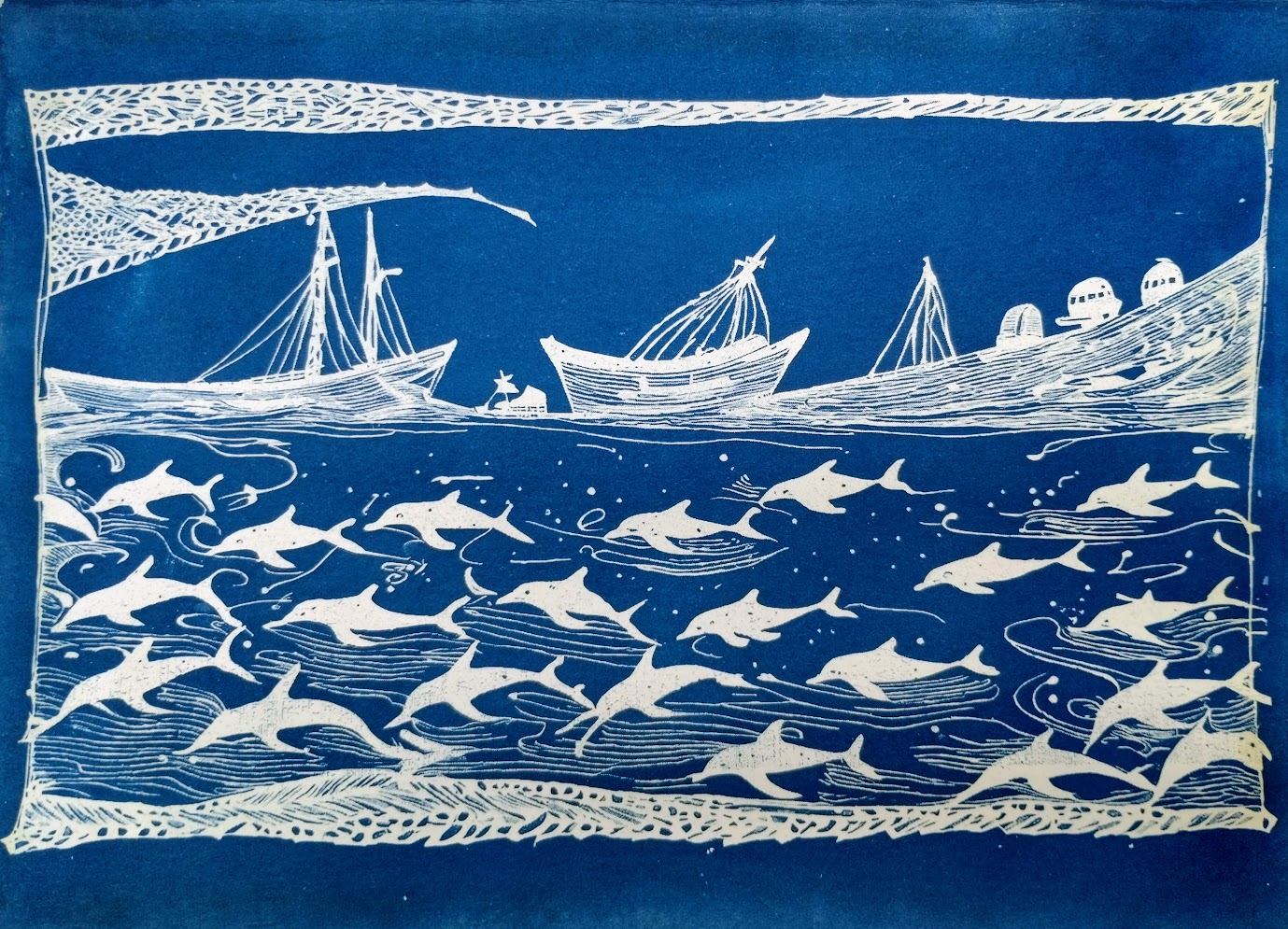
Cyanotype
Create stunning Prussian blue prints using sunlight and simple chemistry in this historic photographic process that captures extraordinary detail.
Overview
Cyanotype is a photographic printing process that produces distinctive cyan-blue prints. It uses a photosensitive solution of ferric ammonium citrate and potassium ferricyanide.
This camera-less technique is perfect for creating botanical prints, photograms, and mixed-media works. The process is environmentally friendly, using only sunlight and water for development.
Origins & Evolution
Sir John Herschel invented cyanotype in 1842. Botanist Anna Atkins used it to document algae specimens, creating the first photographically illustrated book. Architects adopted it for copying technical drawings—hence the term 'blueprint'. Contemporary artists have revived cyanotype for its unique aesthetic and sustainable process.
Key Characteristics
Distinctive Prussian blue color palette
Photogram technique captures intricate detail
Can print on paper, fabric, wood, and more
Non-toxic and environmentally friendly
Sun-powered development process
Permanent and lightfast when properly processed
The Process
Coat the Surface
Mix the two-part sensitizer solution and brush evenly onto paper or fabric. Allow to dry in a dark space.
Arrange Objects
Place objects, negatives, or transparencies on the coated surface. Use a contact frame or glass to hold flat.
Expose to UV Light
Place in direct sunlight for 5-20 minutes. Watch as the exposed areas turn from yellow-green to bronze-gray.
Rinse and Oxidize
Wash thoroughly in water to stop the process. The blue color deepens as the print oxidizes over 24 hours.
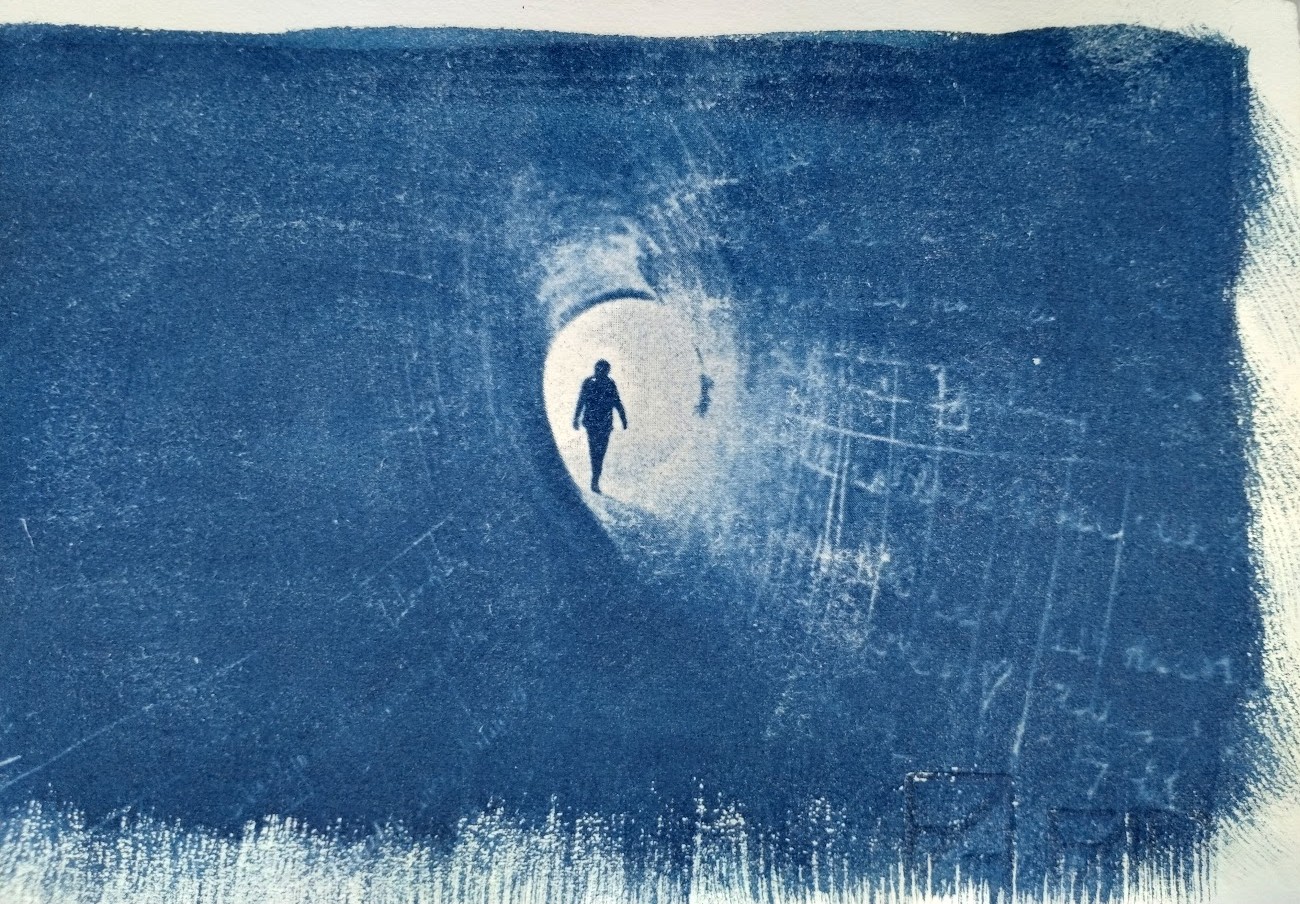
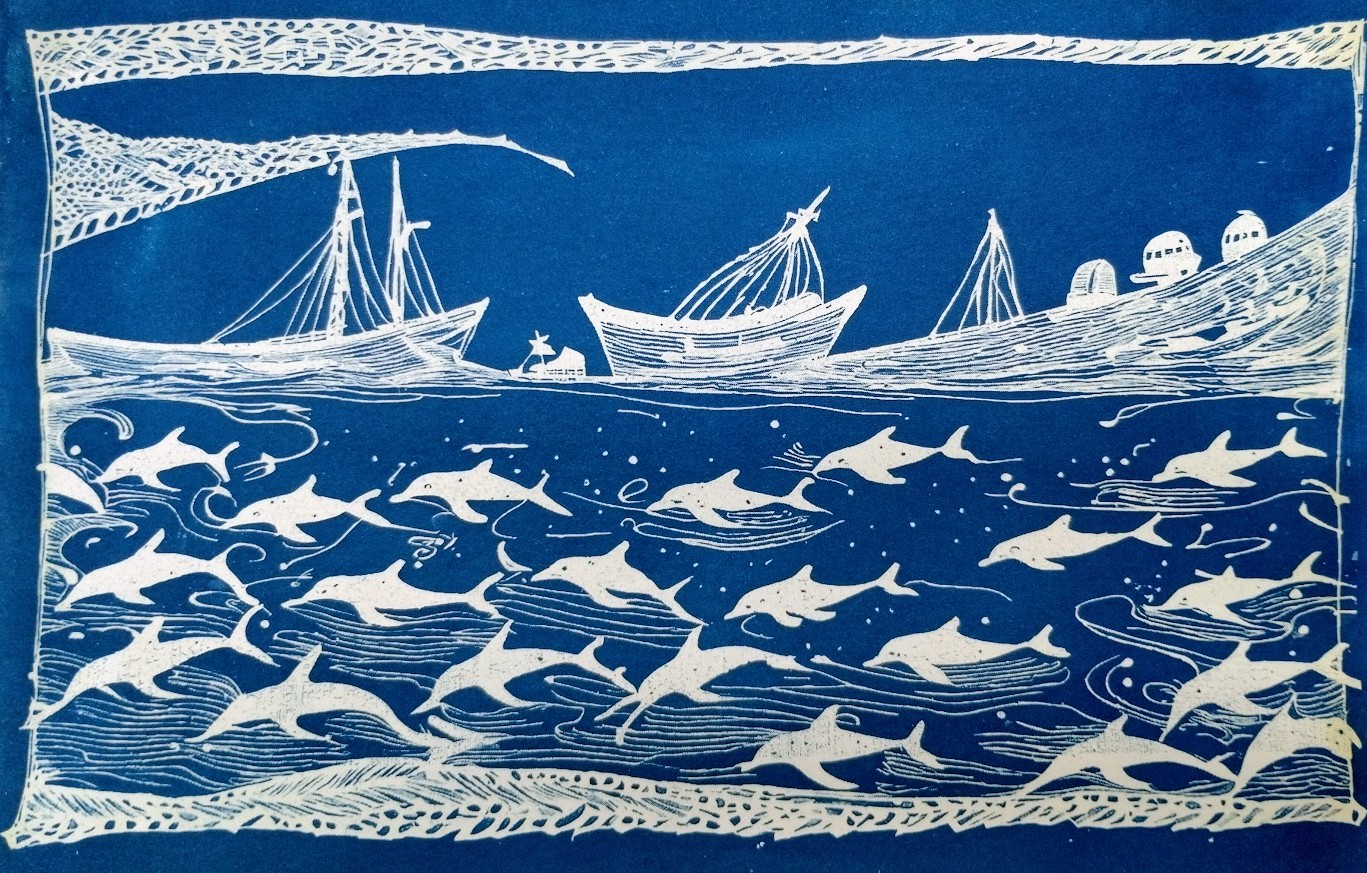
Work in This Technique
Ready to Learn?
Join our 10-day printmaking retreat on Samos and master this technique with personal guidance in our studio.