Relief Printing
Discover the bold simplicity of relief printing, where raised surfaces create striking graphic images with powerful contrast and expressive mark-making.
Overview
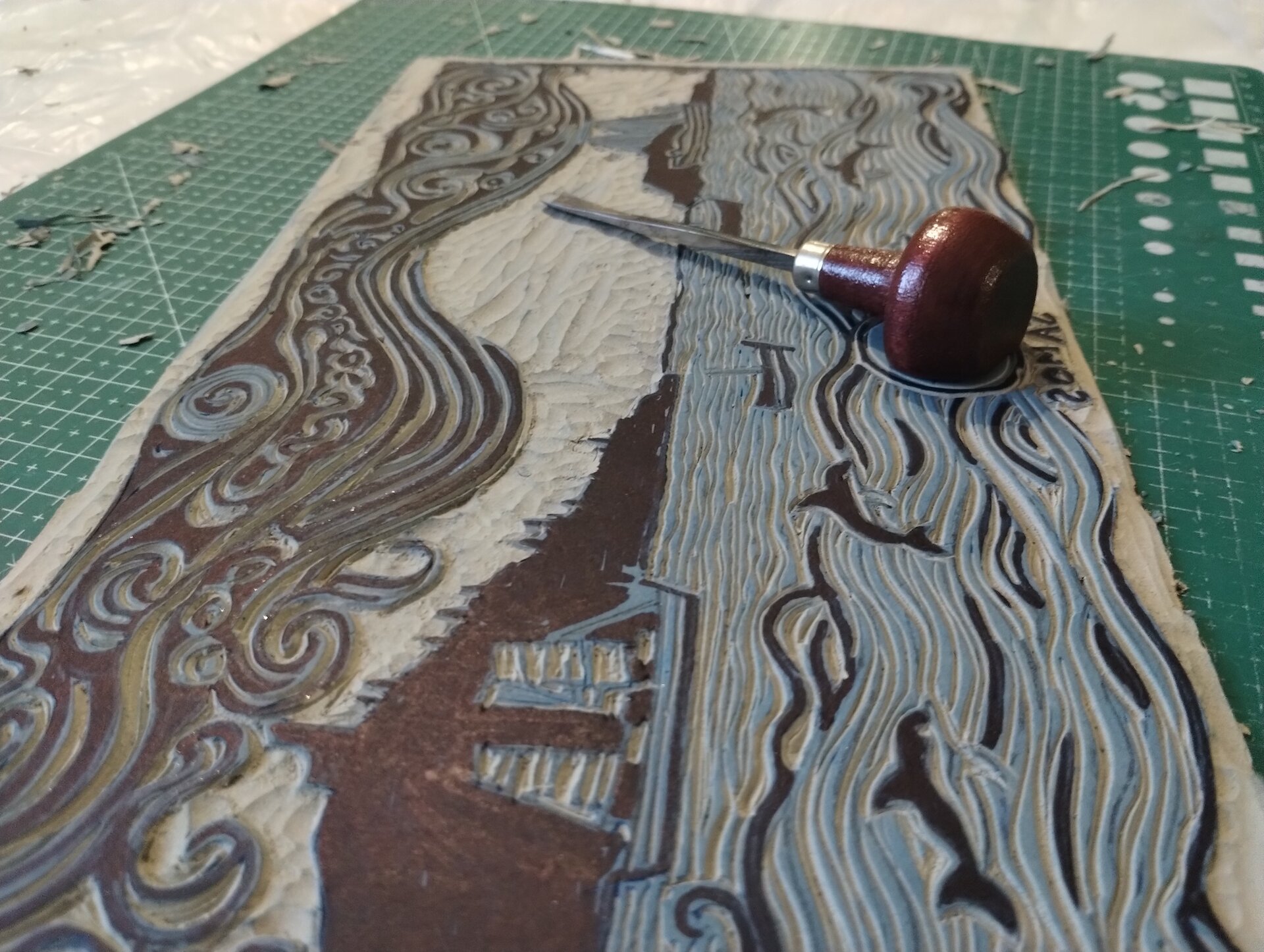
Relief printing is the oldest form of printmaking. In this technique, the artist carves away the negative space, leaving raised areas that receive ink and transfer to paper.
Woodcut and linocut are the most common relief techniques. The bold, graphic quality of relief prints has made them popular for political posters, book illustrations, and contemporary art.
Origins & Evolution
Relief printing began in China around the 2nd century AD and spread to Europe by the 14th century. Woodcuts became essential for book illustration and the spread of images before photography. Japanese ukiyo-e masters like Hokusai perfected color woodblock printing, influencing Western artists from Van Gogh to contemporary printmakers.
Key Characteristics
Bold, graphic quality with strong contrast
Clean edges between inked and non-inked areas
Visible texture from carving marks
Excellent for multiple color layers
Can print on various papers and fabrics
Accessible entry point for beginners
The Process
Design Transfer
Draw or transfer your design onto the block surface. Remember the image will print in reverse.
Carve the Block
Using gouges and carving tools, remove the areas you want to remain white. The raised areas will receive ink.
Apply Ink
Roll ink evenly across the raised surface using a brayer. Build up a thin, even layer for crisp printing.
Transfer to Paper
Place paper on the inked block and apply pressure by hand with a baren or using a press.
Work in This Technique
Ready to Learn?
Join our 10-day printmaking retreat on Samos and master this technique with personal guidance in our studio.